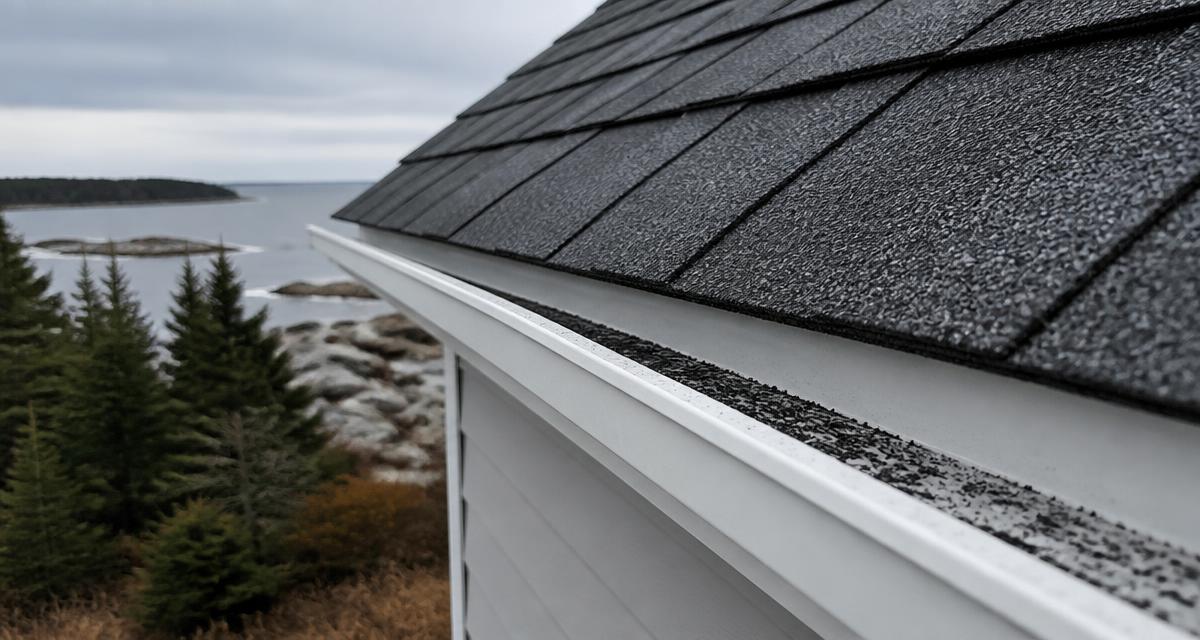
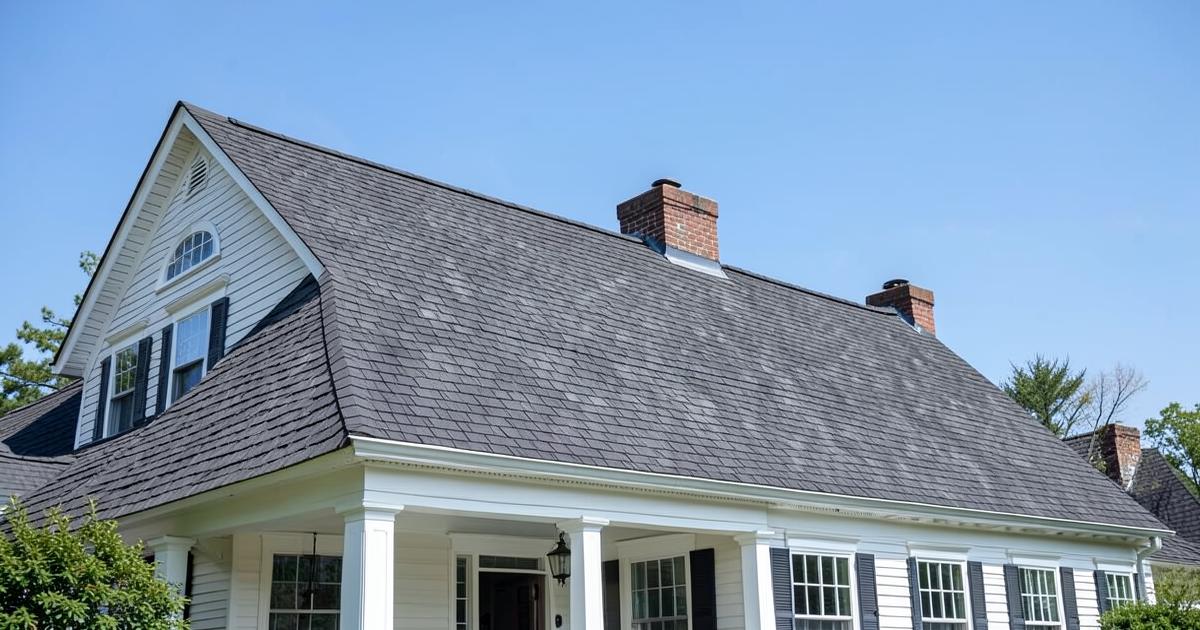
Finding granules in your gutters, downspouts, or in the runoff after a rainstorm is one of the more common things that prompts a homeowner to look more closely at their roof. It's a reasonable thing to notice, but it isn't automatically a sign of a serious problem. Asphalt shingles are built with a layer of mineral granules bonded to the surface, and losing some of them over time is a normal part of how these shingles age.
The real question isn't whether granules are coming off at all — they will, eventually, on every asphalt roof — but how much, how quickly, and in what pattern. A light, even scattering after a new roof's first year or two is different from a heavy accumulation that leaves bald asphalt patches visible on the shingle surface.
This article walks through the common causes of granule loss, from normal aging to storm impact to manufacturing issues, and explains when the amount you're seeing is worth having someone look at in person.
Some granule loss is normal
New asphalt shingles typically shed a small amount of loose, excess granules during their first few rains after installation. This is leftover manufacturing residue, not a sign of a defect. After that initial period, a low, steady rate of granule loss continues for the life of the roof as UV exposure and weather gradually wear at the surface. This baseline shedding is expected and isn't a cause for concern.
Granule loss from normal aging
As shingles age, the asphalt binder that holds granules in place gradually loses its adhesive strength, especially on sun-exposed slopes. This is a slow, cumulative process, and the rate tends to pick up as a roof gets further into its service life. A roof that's 15 or more years old will typically show more granules in the gutters than the same roof did at year five, simply as a function of ongoing weathering.
Foot traffic
Walking on a roof — for gutter cleaning, holiday lights, chimney work, or any other reason — dislodges granules directly under each footstep, especially on older or already-weathered shingles that have less adhesive strength left. Repeated foot traffic in the same path, like a route to a chimney or satellite dish, can create a visibly worn track distinct from the surrounding shingle surface.
Storms and hail
Hail impact is one of the more recognizable causes of sudden, concentrated granule loss. Hail strikes bruise or dislodge granules in a scattered pattern of small circular marks across affected slopes, sometimes exposing the asphalt mat underneath at each impact point. Strong wind-driven rain can also accelerate granule loss over time, particularly on shingles that are already aging and have looser granule adhesion.
Manufacturing factors
Occasionally, granule loss traces back to how a batch of shingles was manufactured rather than how they've weathered on the roof. This is uncommon relative to the far more frequent causes of aging, foot traffic, and storm exposure, and it's not something to assume without other supporting signs, such as unusually early or unusually uneven granule loss across a roof that's otherwise still young.
What shows up in gutters and downspouts
Checking what collects in your gutters over a season is one of the more practical ways to keep an eye on granule loss without getting on the roof yourself. A light, sand-like dusting after normal rain events is typical, especially on an older roof. What's worth paying attention to is a noticeable increase in volume, especially after a specific storm, or granules that look unusually large or angular compared to what you've seen before, which can point to hail impact rather than gradual wear.
Granule loss patterns and what they generally suggest
What you're seeing
Likely cause
General concern level
Light, even dusting after rain on an older roof
Normal aging
Low
Slightly more granules after a new roof's first rains
Manufacturing residue shedding
Low
Worn track or path with visible granule loss
Foot traffic
Low to moderate, depending on extent
Sudden heavy accumulation after a specific storm
Hail or wind-driven rain impact
Moderate to high — worth an inspection
Widespread bald patches with exposed asphalt
Advanced aging or storm damage
High — worth an inspection
When granule loss becomes concerning
What to do if you're seeing more granules than usual
If you've noticed a real increase, the most useful next step is a physical inspection rather than trying to judge severity from the ground. An inspector can distinguish normal, expected wear from a pattern that indicates the shingles are further along in aging than expected, or that a specific storm caused damage worth addressing directly.
Key takeaways
All asphalt shingles shed some granules over their lifespan; this alone isn't a red flag.
New roofs shed manufacturing residue in the first rains after installation.
Foot traffic wears granules off in a visible, localized path.
Hail and storms cause sudden, concentrated granule loss rather than gradual wear.
Bald patches with exposed asphalt or a sudden spike after a storm are worth an inspection.
Frequently asked questions
Is it normal to find granules in my gutters?+
Yes, some granule loss is a normal part of asphalt shingle aging. A light, even amount, especially on an older roof, generally isn't a concern on its own.
How do I know if hail caused my granule loss?+
Hail typically leaves a scattered pattern of small circular impact marks with granules dislodged or bruised at each point, often paired with a sudden increase in gutter debris after a specific storm.
Does walking on my roof damage the shingles?+
Foot traffic can dislodge granules directly underfoot, especially on shingles that are already aging. Occasional careful walking for maintenance is common, but repeated traffic in the same path can create visible wear.
Can granule loss mean my new roof has a defect?+
It's uncommon, but not impossible. New roofs normally shed a small amount of manufacturing residue in the first rains. Unusually early, uneven, or heavy granule loss on a young roof is worth having inspected.
At what point should I worry about granule loss?+
Worth investigating are bald patches with exposed asphalt, a sudden increase tied to a specific storm, or granule loss combined with curling, cracking, or missing shingles.
Seeing more granules than you'd expect?
An inspection can tell you whether it's normal aging or something worth addressing.
VitalRoofs assesses aging asphalt shingle roofs across Southern Maine, Central Maine and Southern New Hampshire, and recommends rejuvenation only where the roof's condition supports it. Articles here are written and reviewed by the VitalRoofs team.