
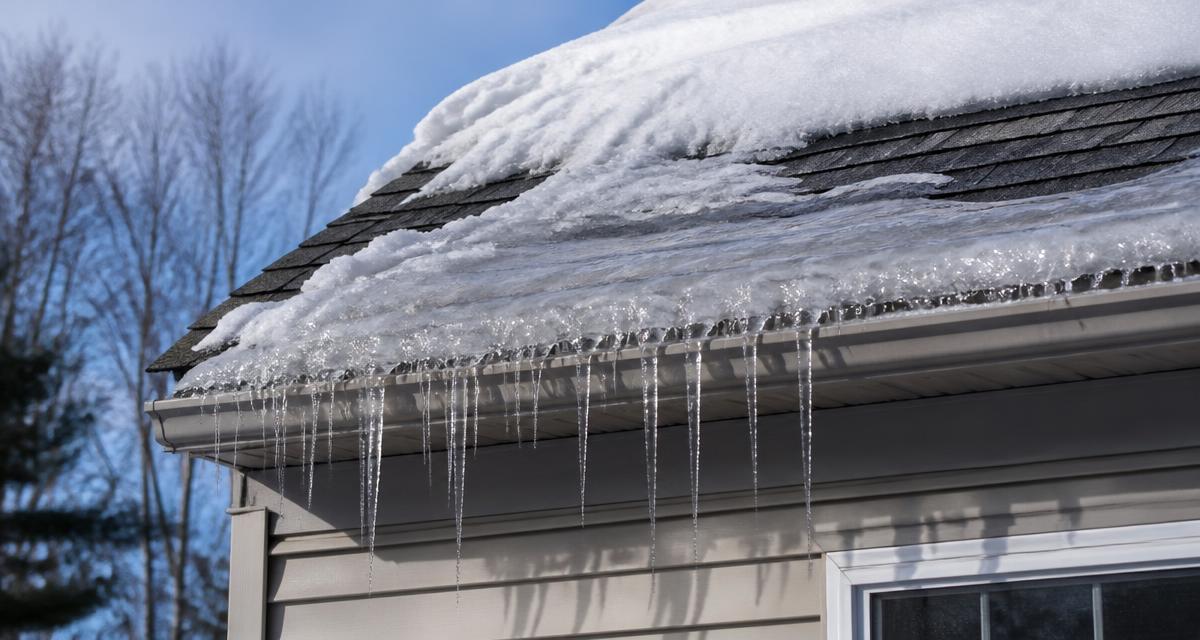
An ice dam forms when snow melts on the upper part of a roof, runs down to the colder eave and refreezes there. The ridge of ice then blocks the next round of meltwater, which backs up under the shingles.
Shingles are designed to shed water running downhill. They are not designed to hold standing water pushed uphill. That is why ice dams cause interior leaks on roofs that are otherwise in decent shape.
The dam is a symptom of escaping heat
Warm air leaking from the living space into the attic warms the roof deck from below. The snow above that warm area melts even when it is well below freezing outside.
Common paths for that heat are recessed lights, bath fans venting into the attic, attic hatches and gaps around chimneys and plumbing stacks.
Ventilation is the other half
A properly vented attic stays close to outdoor temperature, so the roof deck stays uniformly cold and snow melts evenly off the whole surface.
Blocked soffit vents — often packed with insulation pushed into the eaves — are one of the more common reasons a Maine attic runs warm.
What roof work can and cannot do
Repairing damaged shingles or flashing at the eave addresses damage the dam already caused. It does not stop the next dam.
Rejuvenation treats aging asphalt shingles to help keep them flexible. It is not an ice dam remedy, and we will say so plainly if that is the problem you are trying to solve.
Why this is different here
Coastal towns like South Portland and Cape Elizabeth swing above and below freezing repeatedly through the same week, which is the exact melt-freeze cycle that builds dams. Inland towns like Gorham hold colder, so damming there tends to follow a thaw rather than run all winter.