
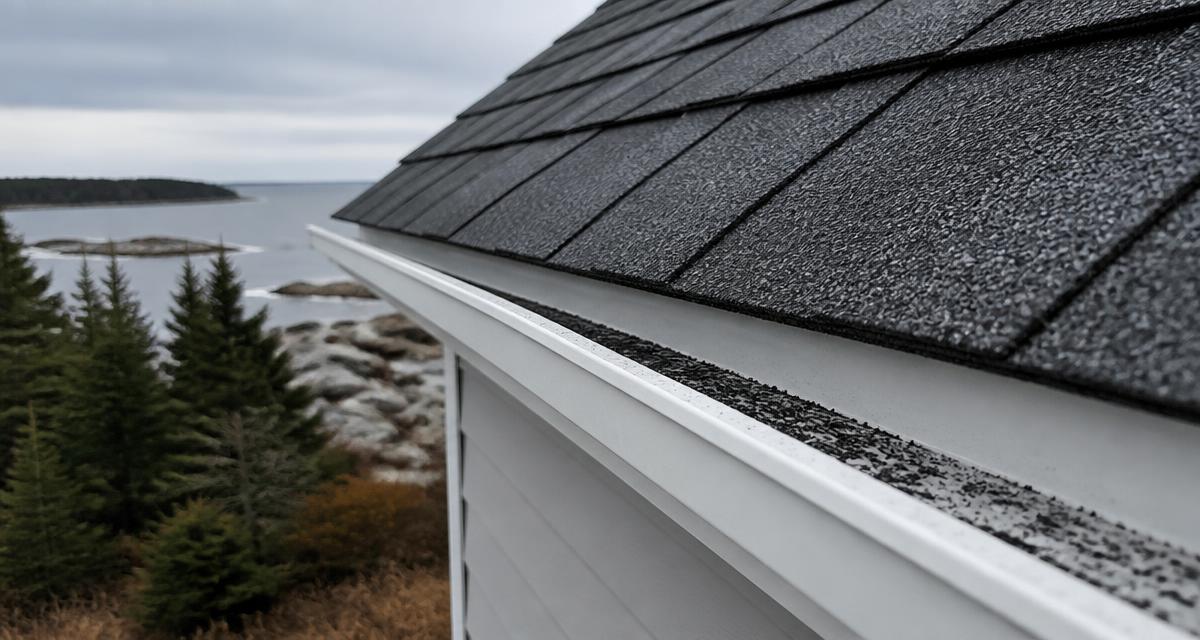
You do not need a ladder for this. Nearly every meaningful spring signal is visible from the lawn, the driveway or a second-floor window.
The goal is not to diagnose the roof. It is to notice change — what looks different from last spring.
1. Granules at the bottom of the downspouts
A scattering of granules is normal on any asphalt roof, especially a newer one shedding loose material. Piles that grow year over year are a different story.
Granules are the shingle's sun protection. Losing them in patches exposes the asphalt mat underneath and accelerates aging.
2. Shingle edges that no longer lie flat
Look along the roof line from a low angle. Edges that lift, cup or curl indicate shingles that have dried and lost flexibility.
Scattered lifting on an otherwise intact roof is the condition rejuvenation is meant for. Widespread curling usually is not.
3. Valleys and the line where roof meets wall
Valleys carry the most water on the roof. Packed leaves or needles there hold moisture in place for weeks.
Discoloured streaks running down from a wall junction can point at flashing rather than at the shingles.
4. Ceilings and the attic
Ring-shaped stains on upstairs ceilings, or dark blotches on the underside of the roof deck, indicate water got in over the winter.
This is the one finding that should move to the front of the queue regardless of the roof's age.
5. The roof's age
Age frames every other observation. The same lifted edge means one thing at year eight and something else at year twenty-five.
If you do not know, a closing document or a permit record from the town office often has the date.
Why this is different here
Spring is when Maine roofs show their winter honestly, and it is also when replacement quotes start arriving. Doing this check before you call anyone means you can ask better questions about what a contractor claims to see.