
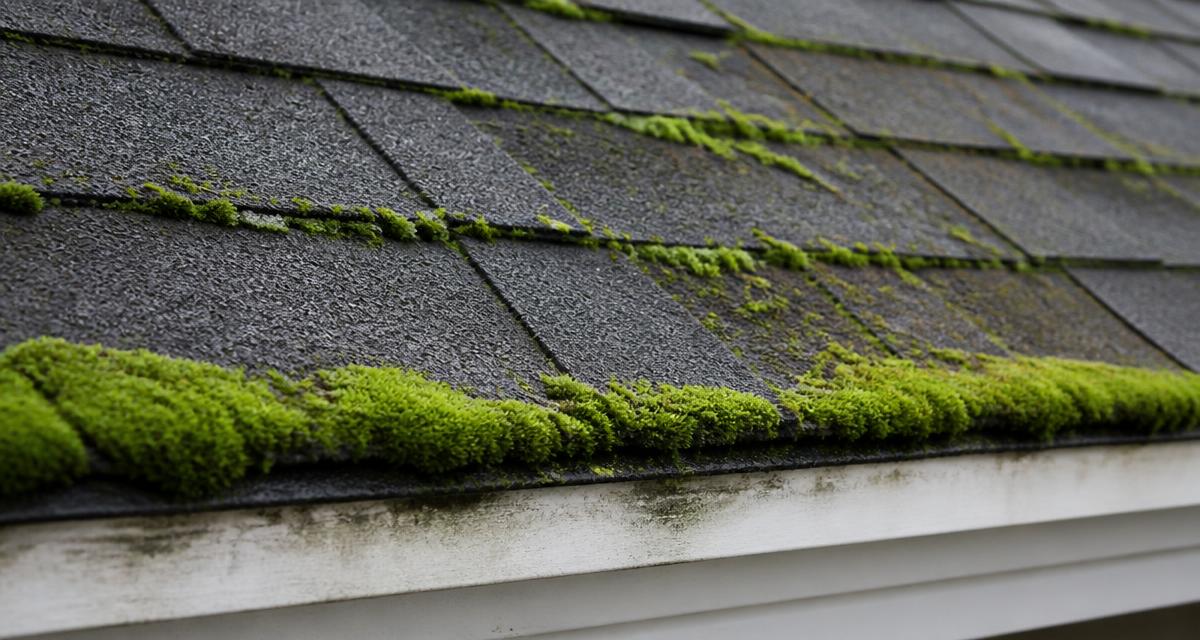
On most Maine houses the moss story is the same: the north-facing slope, or whichever plane sits under trees, grows a green mat while the sunny side stays clear.
The reason is simply drying time. A surface that stays damp for most of the day supports growth; one that dries by mid-morning does not.
What moss does to an asphalt shingle
Moss roots into the granule layer and holds moisture directly against the shingle surface. Sustained dampness accelerates the breakdown of the asphalt.
As the mat thickens it also wicks under shingle edges and lifts them, which gives wind and water a way in.
Moss and algae are not the same thing
Black streaks are algae. They are mostly a staining issue and do not lift shingles.
Green, three-dimensional growth is moss, and it is the one that causes physical problems.
Removing it without causing damage
Gentle, low-pressure methods remove moss while leaving the granule surface intact. Scraping and pressure washing both remove granules along with the moss.
Any roof being considered for rejuvenation needs its moss dealt with first — treatment works on the shingle surface, not through a layer of vegetation.
Why this is different here
The Sebago Lake region towns — Gray, Raymond, Naples, Bridgton — have a lot of pine-shaded lots, and shaded roofs there frequently grow moss on one plane while the rest of the roof looks nearly new. Judging the roof by the sunny side alone gives the wrong answer.