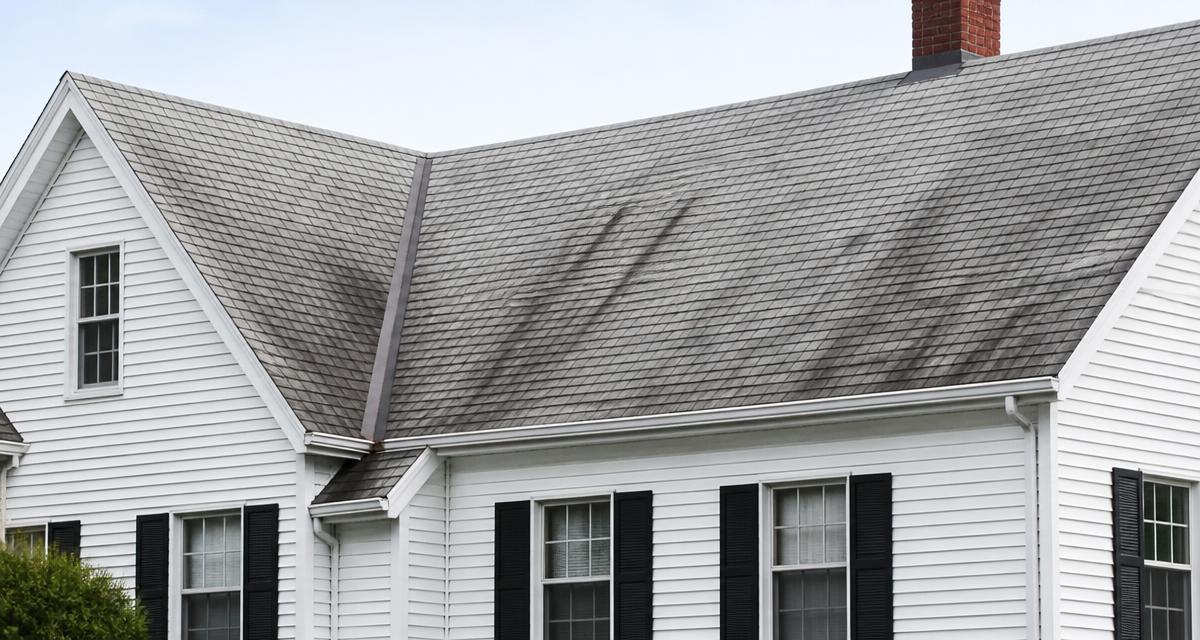
Those dark, almost sooty streaks running down a roof slope are usually not dirt, mold, or fire damage. In the vast majority of cases on asphalt shingle roofs, they're a colony of algae called Gloeocapsa magma, and it's extremely common on roofs in Maine and New Hampshire that get regular moisture and shade.
The algae feeds on the limestone filler in shingle granules and spreads as airborne spores land on the roof, take hold in damp conditions, and multiply. It shows up as dark streaks because it grows fastest where water sheets down the slope and stays damp longest, and it's more visible on lighter-colored shingles.
The good news is that algae staining is mostly cosmetic. The more useful question isn't just what's causing it, but what your cleaning options are and whether cleaning is even the right move for that roof.
What's actually causing the streaks
Gloeocapsa magma is a blue-green algae that appears black or dark brown once it colonizes a roof. It doesn't need soil or organic debris to grow, just moisture, time, and a food source it can find in the limestone-based fillers used in many asphalt shingle formulations. Spores travel by wind and by birds, land on a roof, and spread from there. Once established, a colony can persist for years and spread further each wet season.
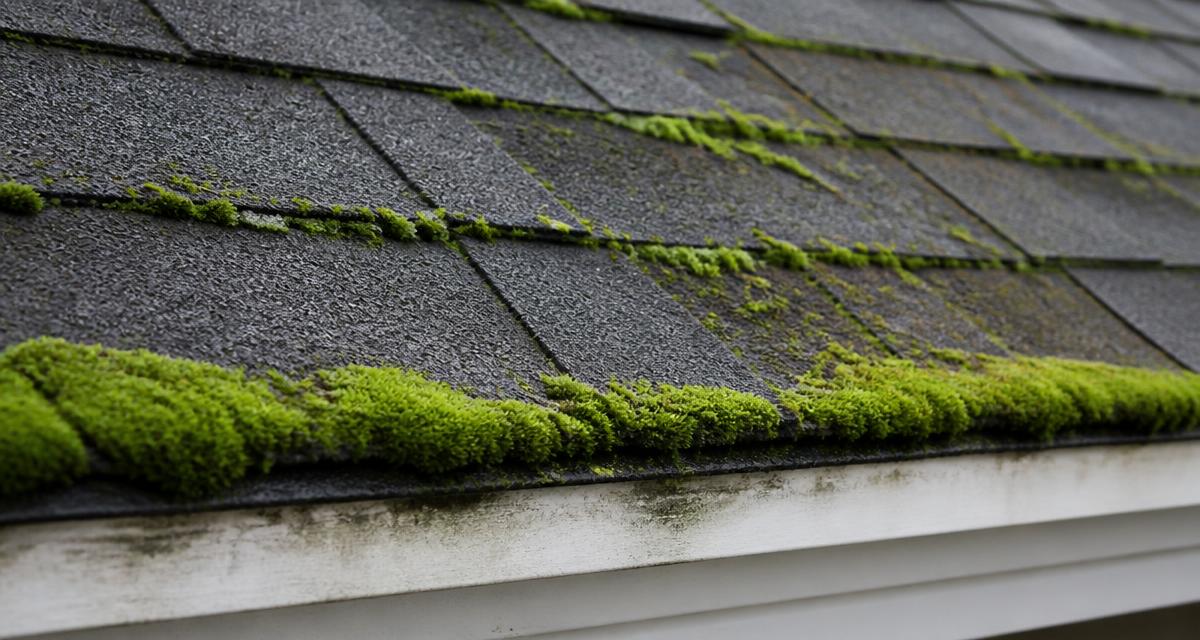
Algae staining is different from the dark, blotchy discoloration caused by trapped organic debris, dirt streaking from a chimney or vent, or soot from a nearby source. It's also different from moss, which grows in raised, textured patches rather than flat dark streaks. The pattern is usually a strong clue: consistent vertical streaking that fans out from the ridge or from shaded areas is a strong sign of algae.
Why some slopes streak and others don't
Algae needs sustained moisture to establish and spread, so north-facing slopes, roof sections shaded by trees, and areas that stay damp longer after rain or snowmelt are the most likely to show streaking first. South-facing slopes that get more direct sun and dry out faster often stay cleaner even on the same roof, same age, same shingle.
This is worth noting because it means streaking severity isn't necessarily a sign of overall roof condition. A roof can have heavy algae staining on one slope and be in good structural shape everywhere, or have light staining and be nearing the end of its service life for unrelated reasons like granule loss or shingle brittleness.
Does algae actually damage the shingles?
Algae itself is mostly a cosmetic issue, not a structural one. It doesn't eat through the asphalt mat the way moss can trap moisture against a roof deck. That said, heavy, long-term colonization can hold moisture against the shingle surface longer than bare granules would, and it can make it harder to see other signs of wear, like granule loss or cracking, underneath the discoloration. It's rarely the reason a roof needs to be replaced, but it's worth having an inspector look past the staining rather than assume the streaking is the whole story.
Cleaning options and their trade-offs
If the staining bothers you, there are a few realistic ways to address it, and they carry very different levels of risk to the shingles.
Roof algae cleaning methods
Method
How it works
Trade-offs
Pressure washing
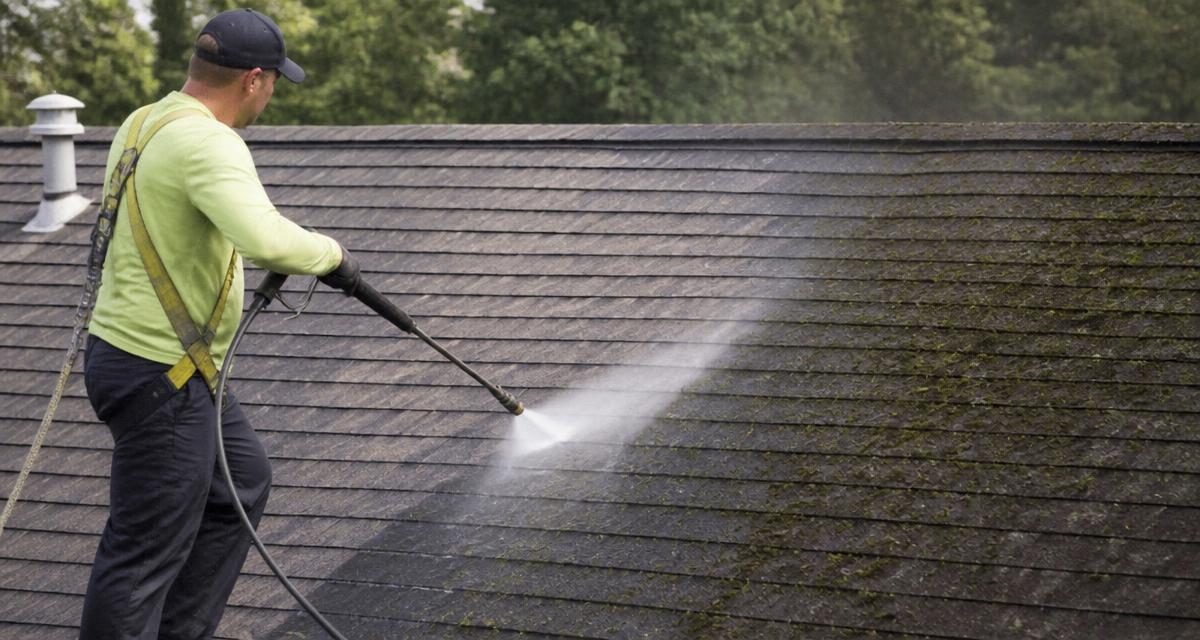
High-pressure water blasts algae and granules off the surface
Can strip granules and shorten shingle life; generally not recommended on asphalt shingles
Soft washing
Low-pressure application of a cleaning solution that kills algae, then a gentle rinse
Gentler on granules than pressure washing, but doesn't address underlying moisture or shingle wear
Spot treatment / DIY solutions
Homeowner-applied cleaners for small streaked areas
Inconsistent results, some products are harsh on shingles or landscaping below
Do nothing
Leave staining as-is
No risk to the shingles, staining may slowly worsen over time
Method choice should match the roof's age and condition. A rejuvenation contractor or roofer can advise on what's safe for your specific shingles.
Soft washing is generally the safer option of the active cleaning methods because it doesn't rely on force to remove the algae. It's worth asking any contractor exactly what solution they use and how it's rinsed, since some cleaning chemicals can be harsh on nearby plants, gutters, or metal flashing if not handled carefully.
Cleaning alone doesn't restore the shingles
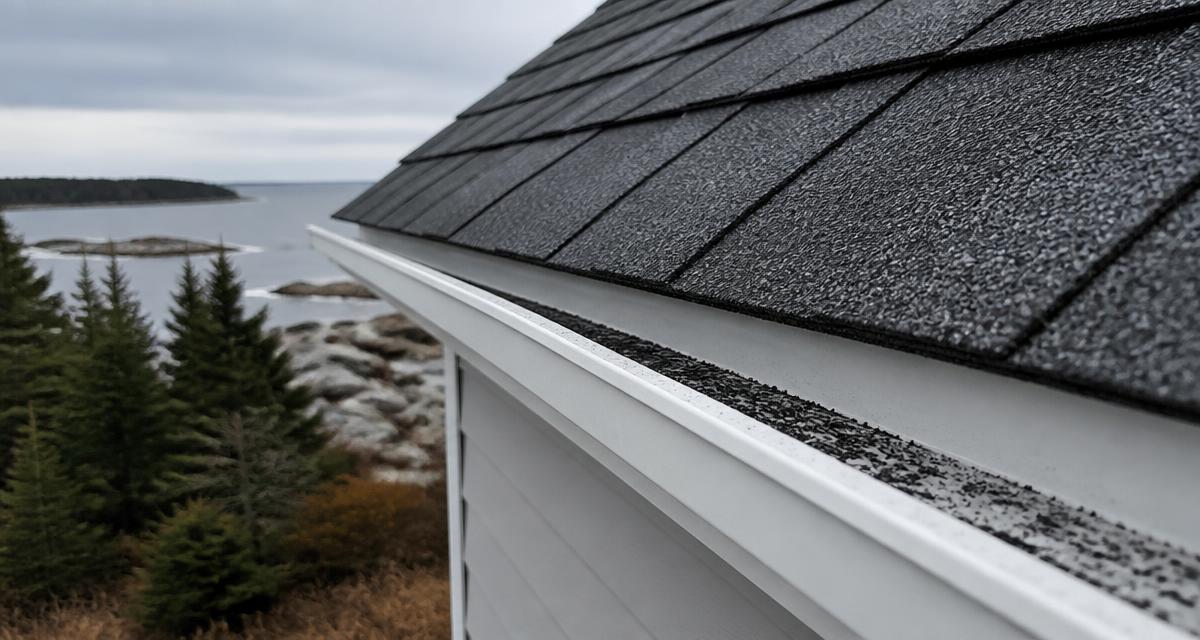
It's worth being clear about what cleaning does and doesn't do. Removing algae restores appearance, it doesn't restore flexibility to shingles that have become brittle, or replace granules that have already washed away. If a roof has both staining and the early signs of aging, like granule loss in the gutters or shingles that look dry and curled at the edges, cleaning and rejuvenation solve different problems and sometimes make sense together, with cleaning addressed before a rejuvenation treatment is applied so the treatment bonds to a clean surface rather than sealing in algae.
Can you prevent it from coming back
Full prevention is difficult because spores travel by wind and by birds landing on any roof in the area, but a few things reduce how fast algae re-establishes: keeping tree branches trimmed back so shaded slopes get more sun and dry faster, keeping gutters clear so water doesn't pool and sheet unevenly, and addressing staining before it's had years to build up a deep colony. None of these guarantee a streak-free roof indefinitely, especially in a climate like Maine's with long wet seasons.
When to call a professional instead of DIYing it
A ladder, a garden hose sprayer, and a bleach solution is a common DIY approach, and it can work for light staining on a single-story ranch. It gets riskier fast on steep slopes, multi-story homes, or roofs where you're not sure how the shingles will react to a given cleaner. If the staining is heavy, the roof is more than one story, or you're also seeing signs of granule loss or brittleness, it's worth having a roofing or rejuvenation contractor take a look rather than guessing at chemicals and pressure settings.
Key takeaways
Black streaks on asphalt shingles are almost always Gloeocapsa magma algae, not dirt or fire damage.
Algae feeds on limestone fillers in shingles and spreads fastest on damp, shaded slopes.
Staining is mostly cosmetic, but heavy colonization can mask other wear underneath.
Soft washing is gentler than pressure washing, which can strip granules and shorten shingle life.
Cleaning restores appearance only; it doesn't address brittleness or granule loss on its own.
Frequently asked questions
Are black streaks a sign my roof needs to be replaced?+
Not by themselves. Streaking is usually cosmetic algae growth. Replacement decisions should be based on granule loss, shingle brittleness, leaks, and overall age, not staining alone.
Will bleach damage my shingles?+
Diluted bleach solutions are commonly used in soft washing, but concentration, dwell time, and rinsing matter. Harsh or improperly applied solutions can affect granule adhesion, which is why professional application is safer than guesswork.
Can pressure washing remove the streaks faster?+
It can remove staining quickly, but the high pressure needed also tends to strip granules from asphalt shingles, which shortens their remaining life. It's generally not recommended for this reason.
Does algae staining spread to neighboring roofs?+
Spores travel by wind and by birds, so it's common to see similar staining patterns on roofs throughout a neighborhood, especially on shaded, north-facing slopes.
Should I clean the roof before rejuvenation treatment?+
Generally yes. Rejuvenation products are meant to penetrate and restore the shingle surface, and that works best on a clean surface rather than one sealed over by algae or debris.
Not sure if it's just staining or something more?
If your roof has streaking along with granule loss or dryness, we can take a look and tell you honestly what's cosmetic and what's not.
VitalRoofs assesses aging asphalt shingle roofs across Southern Maine, Central Maine and Southern New Hampshire, and recommends rejuvenation only where the roof's condition supports it. Articles here are written and reviewed by the VitalRoofs team.